
High-performance Asphalt Formulations: Science and Application
Published on: December 26, 2025 | Last Updated: April 14, 2025
Written By: George Voss
High-performance asphalt formulations are advanced paving materials engineered to withstand extreme traffic, weather, and environmental stresses better than standard asphalt mixes. These specialized blends combine polymer-modified binders, optimized aggregates, and recycled materials to create surfaces that last 50% longer than conventional asphalt. Used in highways, airports, and industrial zones, they reduce long-term costs by 30% while handling heavier loads and temperature swings from -40°F to 160°F.
This article breaks down how these mixes work. We’ll explore their key ingredients like PG-rated (Performance Graded) binders and stone matrix asphalt. You’ll see performance comparisons between standard and high-grade formulas. Learn which mix suits your project based on climate, traffic, and sustainability goals. The guide covers production methods, cost analysis, and real-world applications across North America.
Contents
- What is High-performance Asphalt?
- Components Of High-performance Asphalt Formulations
- Benefits Of High-performance Asphalt Mixtures
- Types Of Hot Mix Asphalt (HMA) for Performance Applications
- Critical Asphalt Mixture Design Considerations
- Implementation Strategies for High-performance Asphalt
- Performance Comparison: Standard Vs. High-performance Asphalt
- Sustainable Practices in High-performance Asphalt
- Frequently Asked Questions
- Closing Thoughts
- Additional Resources for You:
What is High-performance Asphalt?
High-performance asphalt is a top-tier mix made to handle tough roads. Its main goals: last longer, bear heavy loads, and fight wear. These mixes use strong binders and smart designs to beat standard asphalt. They aim to cut repair needs and boost road life by 30-50%.
Definition and Core Objectives
This asphalt type uses advanced science to meet strict specs. Key targets include rut-proof surfaces, crack-free layers, and 20+ year life spans. Binders like PG 76-22 (rated for 76°F high/22°F low temps) adapt to climate stress. The focus stays on doing more with less—thinner layers, fewer fixes, lower costs over time.
Key Asphalt Performance Characteristics
Top traits set these mixes apart. Rut guards stop grooves under truck weight. Thermal shields block cold splits. Tests like the Hamburg wheel track check load strength. High modulus (stiffness) keeps surfaces flat under pressure. Weather-proof blends fight water harm and UV fade. These traits let roads stay smooth for 15-20 years with half the upkeep of basic mixes.
How do these traits come to life? The secret lies in the parts that make the mix. Next, we break down what goes into high-performance asphalt.
Components Of High-performance Asphalt Formulations
Building long-lasting roads starts with smart material choices. High-performance asphalt formulations rely on four critical factors to outlast standard pavements.
Advanced Asphalt Binder Specifications
Asphalt binders act as glue holding aggregates together. Modern specs use PG (Performance Graded) binders rated for specific climates. A PG 76-22 binder works in zones with 76°C peak temps and -22°C lows. Superpave systems now require binders to pass dynamic shear rheometer tests, guaranteeing stability under heavy truck loads.
Polymer-modified Asphalt Binders
Adding 3-7% polymers like SBS (styrene-butadiene-styrene) or crumb rubber transforms ordinary bitumen. This modification boosts crack resistance by 40% compared to virgin binders. Roads with PMA withstand 450% more flex cycles before failing. Costs run $15-$30 more per ton, but lifespan jumps from 12 to 20+ years.
Optimized Aggregate Selection
Aggregates make up 90-95% of asphalt by weight. High-performance mixes demand:
- Crushed granite or basalt with 95%+ fractured faces
- LA Abrasion loss below 35%
- 0.3-0.45 voids in mineral aggregate (VMA)
Angular shapes lock better than smooth gravel, cutting rutting by up to 60%.
Asphalt Binder Grading Systems
The PG system replaced outdated penetration grades. It links binder specs to actual road conditions:
- PG 64-28: Midwest freeze-thaw zones
- PG 70-22: Southwestern high-heat regions
- PG 82-22: Modified binders for airport runways
This method allows 15% thicker binder films around aggregates, improving adhesion.
With these components dialed in, road builders can now focus on maximizing pavement benefits…
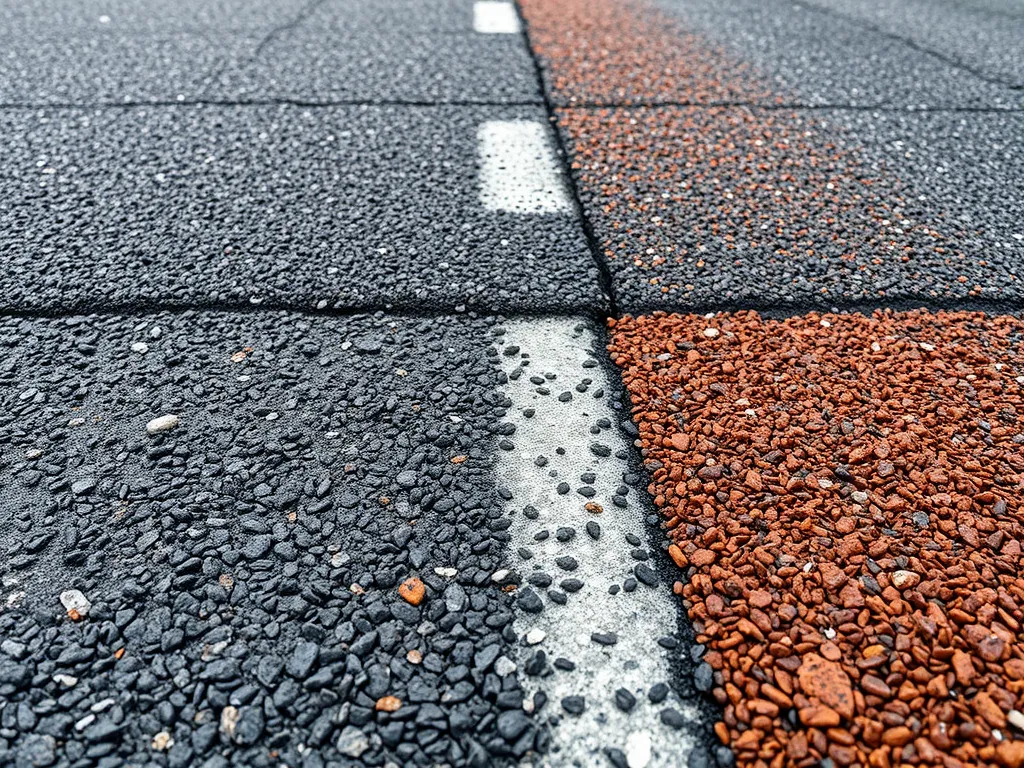
Benefits Of High-performance Asphalt Mixtures
Advanced asphalt formulations deliver measurable upgrades over standard pavements. Engineered for demanding conditions, these mixes tackle common failure modes while pushing durability boundaries.
Superior Resistance to Rutting and Cracking
Polymer-modified asphalt binders combat deformation under heavy loads. Performance grades (PG) like PG 76-22 withstand temperatures up to 76°C without rutting. Stone-on-stone contact in SMA mixes prevents lateral movement, while rubberized additives absorb thermal stress. Tests show 40-60% less rut depth versus conventional mixes using Asphalt Pavement Analyzer trials.
Enhanced Load-bearing Capacity
High-modulus asphalt concrete (HMAC) boosts stiffness by 50-100% compared to standard HMA. Optimized aggregate gradation paired with 5-7% binder content creates interlocking structures that handle 18,000 lb axle loads. Such mixes reduce pavement thickness requirements by 30% on arterial roads.
Extended Pavement Lifespan
Properly designed performance asphalt lasts 15-25 years before major rehab – nearly double standard pavement cycles. Warm-mix technologies with 20% RAP content maintain structural integrity while cutting oxidation rates. Long-Term Pavement Performance data confirms 35% lower cracking rates over two decades.
Improved Weather Resistance
SBS-modified binders retain flexibility at -34°C, resisting thermal cracking. Anti-strip additives like hydrated lime combat moisture damage in freeze-thaw zones. UV-resistant asphalt formulations used in Phoenix, AZ, show 90% fewer raveling incidents after 10 years versus unmodified mixes.
With these engineered advantages established, let’s examine specific HMA types that put performance asphalt theory into practice.
Also See: 5 Ways to Optimize Asphalt Density for Performance
Types Of Hot Mix Asphalt (HMA) for Performance Applications
Hot mix asphalt (HMA) forms the base for high-performance asphalt pavements. Four key mixes stand out for heavy use and tough conditions.
Stone Matrix Asphalt (SMA)
SMA uses a stone-on-stone framework filled with asphalt binder and fibers. This mix resists rutting and lasts 20-40% longer than standard HMA. Fibers like cellulose or polyester keep the binder in place. SMA handles heavy truck traffic and cold climates well.
| Attribute | SMA | Standard HMA |
|---|---|---|
| Binder Content | 6-7% | 4-5% |
| Lifespan | 15-20 years | 10-12 years |
| Cost per Ton | $75-$95 | $50-$70 |
High-modulus Asphalt Concrete
This mix uses hard asphalt binders (like PG 82-22) for roads with heavy loads. It has a modulus of 14,000 MPa, twice that of regular HMA. Ideal for bus lanes and ports, it cuts rut depth by 50%.
Rubberized Asphalt Mixes
Crumb rubber from old tires (15-22% by weight) boosts crack resistance. These mixes lower road noise by 5-12 decibels. Used in states like CA and AZ, they cost $85-$110 per ton but save 30% in upkeep over 10 years.
High-rap Content Formulations
Mixes with 30-40% recycled asphalt pavement (RAP) cut new binder needs by 20%. PG 64-22 binders often work best. High-RAP roads cost $12-$18 less per ton and slash CO2 by 15%.
| RAP % | Binder Saved | Cost Drop |
|---|---|---|
| 20% | 12% | $8/ton |
| 40% | 22% | $16/ton |
Picking the right HMA type depends on traffic, climate, and budget. Next, we’ll break down how to design these mixes for peak asphalt performance.
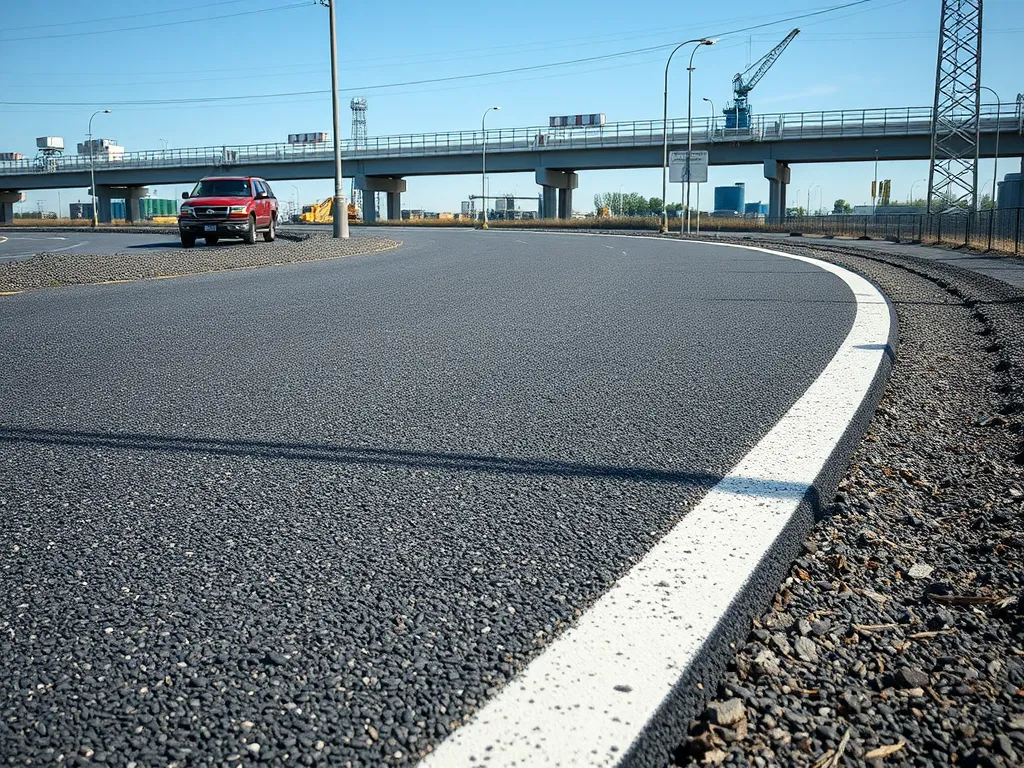
Critical Asphalt Mixture Design Considerations
Creating durable asphalt pavements demands precision in material science and engineering. Three factors dictate success: mix design methods, binder-aggregate balance, and temperature control during installation.
Performance-based Asphalt Mix Design Methods
The Superpave system revolutionized asphalt mix design by linking lab tests to real-world conditions. This method uses Performance-Graded (PG) binders rated for specific climate zones—like PG 76-16 for high-traffic areas in warm regions. Engineers now simulate aging, moisture damage, and traffic loads to predict pavement behavior. Rutting tests at 130°F and cracking tests at -22°F ensure mixes meet strict asphalt specifications.
Ideal Binder-aggregate Ratios
Precise binder content—typically 4-7% by weight—determines asphalt performance characteristics. Too little binder causes raveling; excess leads to rutting. Advanced labs use ignition oven tests to verify ratios within ±0.2% accuracy. For polymer-modified binders, this range tightens to 5.8-6.3% to maintain elasticity without sacrificing stiffness.
Temperature-specific Compaction Requirements
Compaction temperatures vary by binder type. Standard PG 64-22 asphalt requires 280-320°F for proper density. High-modulus mixes need 300-340°F to align stone-on-stone contact. Rubberized asphalt cools faster, demanding rapid compaction within 290-310°F. Missing these windows by 15°F can reduce density by 2%, cutting pavement life by 3-5 years.
Mastering these design elements sets the stage for effective implementation. Next, we explore strategies to adapt these principles across diverse projects and climates.
Implementation Strategies for High-performance Asphalt
Success with performance asphalt requires more than superior materials—it demands precise execution. Contractors must bridge the gap between lab specifications and real-world conditions through targeted strategies.
Project-specific Mix Selection Criteria
High-performance asphalt formulations start with traffic volume, vehicle types, and road function. Heavy truck routes need PG 76-22 binders with rut-resistant SMA mixes, while residential streets perform well with PG 64-22 binders blended with 30% recycled asphalt pavement (RAP). The Superpave system guides these choices using projected equivalent single axle loads (ESALs) to match pavement stress levels. For example, interstate highways exceeding 30 million ESALs require stone-on-stone contact mixes, while local roads under 3 million ESALs use finer-graded designs.
Climate-adapted Formulation Approaches
Temperature extremes dictate binder grades under the Performance Graded (PG) system. Northern freeze-thaw zones use polymer-modified binders (PMBs) with -34°C low-temperature ratings, while desert regions specify PG 82-22 binders resisting softening at 82°C. Coastal projects integrate 2% hydrated lime to combat moisture damage. Recent trials show adding 0.3% synthetic fibers reduces thermal cracking by 40% in -40°C environments. These tweaks ensure pavements withstand site-specific thermal cycling without premature failure.
Quality Control During Production
Consistent results demand strict process controls. Batch plants monitor binder temperature within ±5°C of the 150-177°C target range using infrared sensors. Nuclear density gauges verify 92-96% compaction rates during placement. Labs test samples for voids in mineral aggregate (VMA) staying between 14-17% and tensile strength ratios above 80% per AASHTO T 283. Field crews use non-destructive falling weight deflectometers to confirm modulus values meet 500,000 psi minimums for heavy-load corridors.
These implementation methods set the stage for quantifiable comparisons between standard and upgraded pavements. Up next: measurable differences in longevity, structural capacity, and cost efficiency.
Performance Comparison: Standard Vs. High-performance Asphalt
Distinct gaps in capability split standard asphalt from high-performance formulations. These gaps impact how roads hold up to traffic, budgets, and long-term planning. Let’s break down critical comparison points.
Structural Capacity Differences
Standard asphalt pavements carry up to 3,000 psi under typical traffic. High-performance asphalt mixtures boost this to 4,500+ psi through polymer-modified binders and tightly graded aggregates. This allows roads to support 40% higher axle loads without rutting. Airfield runways using PG 76-22 binders (a common performance grade) handle 747 jets without surface distortion—a task standard mixes can’t manage.
Lifecycle Cost Analysis
Initial costs for high-performance asphalt run 15-25% higher than standard mixes. But over 20 years, savings hit 30-40%. Why? Standard pavements need resurfacing every 6-8 years. High-performance variants last 12-15 years before major work. For a 10-mile highway, this cuts total spending from $8.2M (standard) to $5.6M (high-performance) over two decades, factoring in inflation and labor.
Maintenance Frequency Reduction
Crack sealing on standard asphalt occurs every 3-5 years. High-performance formulations stretch this to 8-10 years. Stone Matrix Asphalt (SMA), a top-tier mix, shows 70% less fatigue cracking after 10 years of heavy truck traffic. Cities using rubberized asphalt report 60% fewer pothole repairs annually compared to conventional hot mix.
As sustainability gains focus, high-performance asphalt formulations also play a vital role in green infrastructure—tying durability to planetary care.
Sustainable Practices in High-performance Asphalt
Modern high-performance asphalt formulations balance durability with eco-conscious strategies. These methods reduce environmental impact while meeting strict performance needs for roads, runways, and industrial surfaces.
Recycled Material Integration
Reclaimed asphalt pavement (RAP) makes up 30-40% of many high-performance mixes. Recycled asphalt shingles (RAS) add flexibility through fiber content. Blending recycled materials with polymer-modified binders cuts costs by 20-30% without sacrificing rut resistance. PG 76-22 binders bond new and recycled aggregates, meeting Superpave specifications for extreme climates.
Energy-efficient Production Methods
Warm-mix asphalt technologies lower production temps to 230-275°F versus 300-350°F for traditional hot mix. Foaming processes or chemical additives reduce fuel use by 15-20%. Lower emissions pair with better compaction at placement sites. These methods meet LEED standards while maintaining Marshall stability values above 1,800 lbs.
Permeable Pavement Applications
Open-graded friction courses (OGFC) in high-performance systems allow 15-25% void spaces. This design manages 100-500 inches of rainfall per hour, cutting stormwater runoff by 70-90%. Polymer-modified binders prevent raveling in porous structures. Permeable pavements with 9.5mm NMAS aggregates reduce urban heat island effects by 5-7°F versus dense-graded mixes.
These innovations set new benchmarks for roads that last longer while protecting ecosystems. Next, we explore how to match these formulations to specific project needs.

Frequently Asked Questions
What Distinguishes High-performance Asphalt From Standard Mixes?
High-performance asphalt is engineered with advanced materials and additives to enhance durability, load capacity, and resistance to environmental factors, unlike standard mixes which may not meet rigorous performance standards.
What Are the Primary Types Of Hot Mix Asphalt (HMA)?
The primary types of hot mix asphalt include Stone Matrix Asphalt (SMA), High-Modulus Asphalt Concrete, Rubberized Asphalt Mixes, and High-RAP (Reclaimed Asphalt Pavement) Content Formulations, each designed for specific applications.
How Does the HMA Method Improve Pavement Quality?
HMA methods improve pavement quality by optimizing aggregate and binder proportions, allowing for better compaction and performance characteristics that withstand heavy loads and varying weather conditions.
What Factors Determine the Best Asphalt Mix for a Project?
Factors include traffic volume, axle load types, climate conditions, project specifications, and budget constraints, all guiding the selection of the most suitable asphalt mix formulation for each unique project.
Closing Thoughts
High-performance asphalt formulations represent a significant advancement in paving technology. By integrating advanced binders, optimized aggregates, and innovative design methods, these mixtures deliver superior durability, longevity, and functionality.
From enhanced resistance to common pavement distress, such as rutting and cracking, to sustainable practices that reduce environmental impact, the benefits of high-performance asphalt are clear. Proper implementation strategies ensure these materials meet project-specific needs while maintaining quality throughout production.
For those planning projects, understanding the nuances between standard and high-performance asphalt is vital. The investment in quality formulations pays off in reduced maintenance and extended lifespan.
To explore more about optimizing your asphalt projects, visit Asphalt Calculator USA. There you’ll find tools and resources to help you make informed decisions for effective and sustainable paving solutions.
Additional Resources for You:
- American Association of State Highway and Transportation Officials (AASHTO). (2008). Mechanistic-Empirical Pavement Design Guide (MEPDG). Washington, DC: AASHTO.
- Dot
- Industry Asphalt – Universal Matter
- Asphalt concrete – Wikipedia
- Performance Specifications for Asphalt Mixtures | The National Academies Press

