Green Products for Asphalt Maintenance: Sustainable Solutions for Longevity
Published on: December 25, 2025 | Last Updated: April 14, 2025
Written By: George Voss
Green products for asphalt maintenance are eco-conscious materials designed to repair and protect pavements while minimizing environmental harm. These include plant-based sealants, recycled rubber crack fillers, and low-VOC (volatile organic compound) sealers that replace traditional petroleum-heavy options. Unlike conventional methods, green alternatives reduce toxic runoff, use renewable resources, and often contain 30-95% recycled content. They address key concerns like water contamination and carbon emissions without sacrificing pavement performance.
This guide explores modern sustainable asphalt care. Learn about bio-based sealcoating formulas that cut VOC emissions by 50%, rubberized patching compounds made from recycled tires, and cold-applied repairs that slash energy use. We’ll break down how these products prevent cracks, protect stormwater systems, and align with EPA regulations. Discover cost comparisons, application tips for solar-powered equipment, and real-world durability data from recent DOT projects.
Contents
- What Are Green Products for Asphalt Maintenance?
- Types Of Eco-friendly Asphalt Maintenance Products
- Application Of Green Asphalt Products
- Enhancing Asphalt Longevity With Green Solutions
- Environmental Impact Of Green Asphalt Maintenance
- FAQs: Green Asphalt Maintenance Solutions
- Closing Thoughts
- Additional Resources for You:
What Are Green Products for Asphalt Maintenance?
Green asphalt maintenance products protect pavement while minimizing harm to ecosystems. These solutions balance performance with planet-friendly formulas, offering alternatives to petroleum-heavy conventional options.
Defining Environmentally Friendly Asphalt Solutions
Environmentally friendly asphalt products employ renewable, recycled, or low-impact materials. They aim to cut pollution during application and throughout the pavement lifecycle.
Core characteristics of eco-friendly asphalt maintenance products
Top green asphalt products share three traits: low-VOC formulas (under 50g/L), bio-based components like soy or pine resin, and recycled content such as crumb rubber. Many carry certifications like Green Seal or EcoLogo. Unlike traditional sealants containing coal tar—a known carcinogen—eco seal asphalt options avoid polycyclic aromatic hydrocarbons (PAHs) linked to water contamination.
Key Differences From Traditional Asphalt Maintenance Methods
Where conventional methods prioritize cost and speed, sustainable asphalt repair focuses on long-term ecological balance. Standard sealcoating releases 300-500g/L VOCs per gallon—green alternatives slash this by 90%.
Environmental and performance drawbacks of conventional products
Coal tar sealants, still used in 85 million square yards annually, contaminate stormwater with toxic PAHs. Petroleum-based crack fillers require frequent reapplication, generating 30% more waste over a decade compared to rubber-modified eco options. Hot-applied patching compounds demand high energy inputs, emitting 40% more CO₂ than cold-mix sustainable asphalt products.
Ready to explore specific green asphalt solutions? Let’s examine the top product categories transforming pavement care.
Types Of Eco-friendly Asphalt Maintenance Products
Modern pavement care offers multiple green alternatives to petroleum-based products. These solutions protect surfaces while cutting environmental harm. Let’s break down key categories reshaping asphalt maintenance.
Green Asphalt Sealers and Sealcoating Solutions
Sealcoating shields asphalt from oxidation, oil spills, and weather damage. Eco-options now match traditional performance without toxic side effects.
Asphalt emulsion sealers: Composition and environmental benefits
Water-based asphalt emulsions replace coal-tar derivatives. Containing 20-40% recycled asphalt pavement (RAP) and plant-derived polymers, these sealers slash VOC emissions by 85% compared to conventional mixes. They meet EPA Stormwater Management Model (SWMM) standards for urban runoff safety.
Bio-based sealers derived from renewable resources
Innovators now blend soybean oil, lignins, and vegetable waxes into sealants. These formulas degrade 3x faster than petroleum versions if washed into ecosystems. Minnesota’s MnDOT reports bio-sealers prevent 12-18 lbs of CO2 emissions per gallon during production.
Sustainable Asphalt Repair Materials
From cracks to potholes, green fixes now rival traditional methods in speed and durability. Sustainable options often incorporate post-consumer waste.
Recycled rubber-modified crack fillers
Made with 30-50% ground tire rubber, these elastic fillers handle temperature swings from -20°F to 160°F. Rubberized blends reduce landfill waste while offering 2x the movement capacity of standard asphalt cement fillers. Caltrans specifications now mandate rubber-modified products for cracks wider than ½ inch.
Cold-applied eco-friendly pothole patching compounds
New plant-based binders let crews repair holes without energy-intensive hot mixes. These “throw-and-go” patches contain 60% post-industrial plastics and cure in 15 minutes. Rhode Island DOT trials show cold patches lasting 5-7 years vs 3-4 years for traditional hot-mix repairs.
Choosing these green asphalt maintenance products sets the stage for proper application. Next, we’ll explore techniques that maximize their eco-benefits during installation.
Application Of Green Asphalt Products
Using green goods for asphalt care needs smart steps. These steps keep work green and save cash. Focus on how to apply them right for best effect.
Best Ways for Green Sealcoating
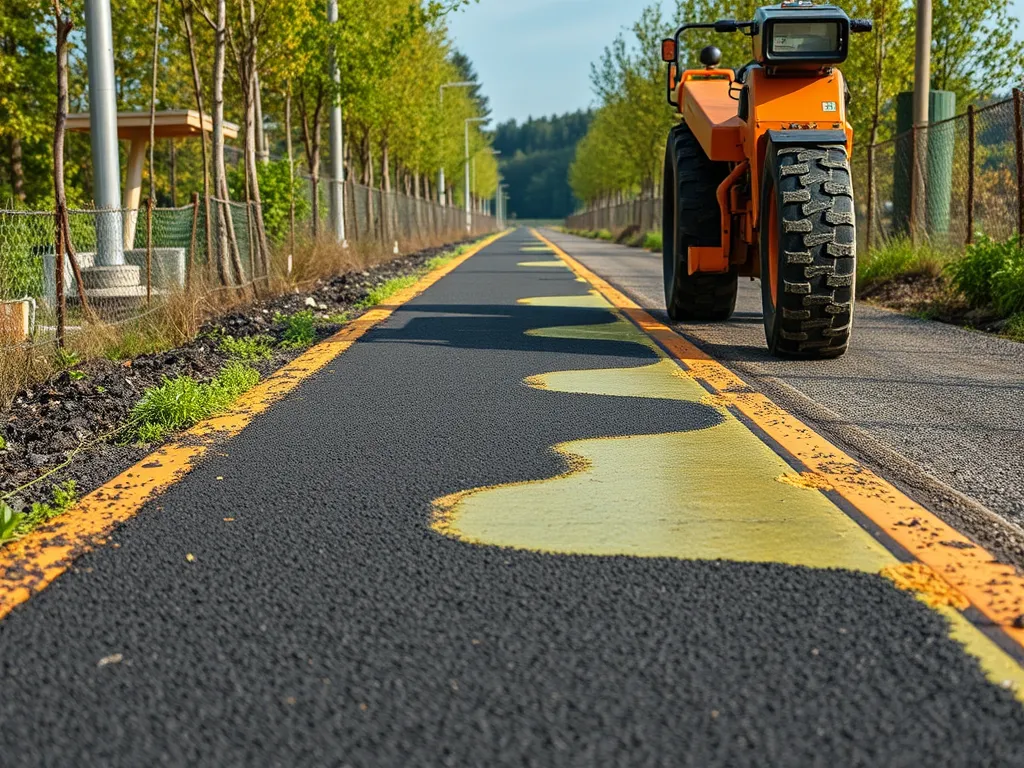
Sealcoating keeps asphalt safe. Green ways cut harm. Use tools that don’t pollute. Time jobs when rain is not near to stop wash-off.
Low-VOC ways to apply sealers
Low-VOC sealers let out less fumes. Spray them with gear that uses less fuel. Rollers with tight lids stop spills. Work in thin coats to dry fast. This cuts waste and keeps air clean. Eco seal asphalt tasks drop VOC levels by 60% vs old methods.
Tools That Use Less Power
New tools use sun or plugs, not gas. This cuts fumes and noise. They last longer and cost less to run. Green asphalt repair now needs half the energy of old gear.
Plug-in fix tools and their perks
Plug-in tools like patchers and heat lamps need no gas. A 5kW heat lamp can fix cracks fast. No fumes mean safer sites. These tools save up to 40% in CO2 per job. Solar-powered brooms sweep dust with zero emissions.
These green steps show how care for asphalt can help the earth. Next, learn how to make asphalt last longer with smart plans.
Also See: Advantages Of Bio-based Asphalt Systems for Roads
Enhancing Asphalt Longevity With Green Solutions
Modern pavement care blends eco-conscious practices with advanced materials to boost durability. Green asphalt maintenance products protect surfaces while aligning with recycling systems and low-impact methods.
Preventive Maintenance Strategies
Proactive care reduces major repairs. Sustainable asphalt maintenance starts with simple, consistent actions that curb decay before it spreads.
Routine cleaning techniques to extend pavement life
Remove debris monthly using electric sweepers or biodegradable cleaners. Key steps:
- Clear leaves and dirt to prevent moisture traps
- Use plant-based degreasers on oil stains within 48 hours
- Apply porous pavement cleaners to unclog surface voids
These methods stop cracks by eliminating water retention and chemical erosion. Green seal asphalt treatments last 30% longer on clean surfaces versus neglected ones.
Recyclability Of Green Asphalt Materials
Eco-friendly asphalt products align with circular reuse systems. Over 90% of reclaimed asphalt pavement (RAP) gets reused when paired with sustainable binders and additives.
Integration with hot-mix and warm-mix asphalt recycling
Green asphalt repair materials work in both HMA (300-350°F) and WMA (250-275°F) plants. Benefits:
- Bio-based rejuvenators restore aged RAP binders
- Recycled rubber fillers merge with new aggregates
- Low-VOC warm-mix additives cut plant emissions by 20%
Projects using 30% RAP with eco seal asphalt products report equal performance to virgin mixes at $15-$20 per ton savings.
These sustainable asphalt maintenance approaches not only preserve pavement but set the stage for evaluating their broader ecological benefits. Next, we’ll quantify their role in cutting emissions and protecting waterways.
Environmental Impact Of Green Asphalt Maintenance
Choosing green asphalt maintenance products directly supports planetary health while maintaining pavement quality. Tactics now focus on cutting harmful outputs and shielding natural systems.
Reducing Carbon Footprint in Pavement Preservation
Cold mix asphalt technology slashes production temps from 300°F to 50-70°F, trimming fuel needs by up to 50%. Using recycled asphalt pavement (RAP) in mixes cuts CO2 output by 15-30% compared to virgin materials. Bio-based binders from plant sources like soy or pine resin absorb CO2 during growth, creating carbon-neutral paving solutions.
Water Protection Through Eco-conscious Products
Traditional coal tar sealants contain 50% polycyclic aromatic hydrocarbons (PAHs) – toxins linked to aquatic life harm. Green substitutes like asphalt emulsion sealers hold under 0.1% PAH levels. Bio-sealers from natural oils and waxes fully biodegrade without contaminating groundwater.
Preventing chemical runoff in stormwater systems
Permeable asphalt pavements allow 80% of stormwater to soak through, filtering pollutants before reaching drains. Projects using vegetated swales alongside pavements cut runoff volume by 60%. Low-VOC crack fillers with recycled rubber stop toxins from washing into streams during rains.
As cities adopt these tactics, questions arise about balancing sustainability with pavement performance standards. [Next: FAQs address practical concerns about green product capabilities.]
FAQs: Green Asphalt Maintenance Solutions
What Are the Most Effective Eco-friendly Asphalt Sealers?
Effective eco-friendly asphalt sealers often include water-based asphalt emulsions and bio-based sealants made from renewable resources. These products not only provide robust protection against weathering and wear but also significantly reduce VOC emissions compared to traditional sealers.
How Do Sustainable Crack Fillers Compare to Conventional Options?
Sustainable crack fillers, such as recycled rubber-modified products, outperform conventional options in terms of flexibility and durability. They provide superior movement capacity and are more resilient against temperature fluctuations, leading to longer-lasting repairs and reduced environmental impact.
Can Green Maintenance Products Match Traditional Durability?
Yes, many green maintenance products have been formulated to match or exceed the durability of traditional options. Innovations in material science have led to eco-friendly solutions that offer similar performance characteristics, ensuring that pavements remain strong and reliable.
What Makes Asphalt Emulsion Sealers Environmentally Safe?
Asphalt emulsion sealers are considered environmentally safe due to their low VOC content and reduced levels of harmful chemicals, such as PAHs. Being water-based and often containing recycled materials, they significantly lessen the ecological footprint of asphalt maintenance while effectively protecting the pavement.
Closing Thoughts
Embracing green products for asphalt maintenance significantly enhances the sustainability of pavement care. These eco-friendly solutions not only protect the environment but also ensure the longevity of asphalt surfaces.
From bio-based sealers to recycled rubber-modified crack fillers, these innovative products provide effective alternatives to traditional materials. They reduce environmental impact while matching the performance and durability expectations.
Implementing practices such as low-VOC application methods and using energy-efficient maintenance tools further amplifies these benefits. Developing a systematic eco-maintenance plan can lead to reduced costs and improved pavement health over time.
For more information on green asphalt maintenance solutions, visit Asphalt Calculator USA.
Additional Resources for You:
- Transportation Research Board (TRB, Peer-Reviewed Research & Circulars)
- Simple Green | US | Household | Outdoors | Driveways Asphalt
- Grass and Stabilized Gravel Driveway Installations – Green Driveway
- Asphalt Paving Contractor | Asphalt Seal & Repair | De Pere, WI
- Go Green Products – High-Quality Asphalt Road Maintenance & Color Asphalt Solutions