Evaluating the Cost-effectiveness Of Professional Vs DIY Asphalt Tools
Published on: December 12, 2025 | Last Updated: April 14, 2025
Written By: George Voss
Evaluating the cost-effectiveness of professional versus DIY asphalt tools requires comparing upfront costs, long-term savings, tool performance, and project requirements. Professional-grade tools like asphalt rollers ($2,000-$15,000) and infrared heaters ($5,000+) offer precision and durability (10+ years with maintenance), while DIY kits ($200-$500) like hand tampers or sealcoating sprayers work for small repairs but last 2-5 years. Large projects like parking lots demand professional tools for speed and quality, while DIY suits driveways under 500 sq ft. Safety varies too: pro equipment includes features like automatic shutoff valves, whereas DIY methods may require extra protective gear to avoid burns or fumes.
This article breaks down costs, performance, and safety for both options. We’ll compare initial investments versus 5-year maintenance expenses, analyze how project size impacts tool choices, and review surface quality differences. You’ll learn why commercial-grade tools cut labor time by 40-60% on big jobs and how DIY approaches save up to 70% on small patches. We also cover environmental impacts, lifespan expectations, and FAQs like asphalt vs concrete costs.
Contents
- Introduction to Asphalt Tool Cost-effectiveness
- Defining Professional and DIY Asphalt Tools
- Pros and Cons Of Professional Asphalt Tools
- Pros and Cons Of DIY Asphalt Tools
- Cost Analysis: Professional Vs DIY Asphalt Tools
- Quality and Durability Comparison
- Safety and Environmental Considerations
- Frequently Asked Questions
- Closing Thoughts
- Additional Resources for You:
Introduction to Asphalt Tool Cost-effectiveness
Cost-effectiveness in asphalt projects balances initial spending against long-term performance. Factors like project size, labor hours, and equipment durability determine whether professional-grade tools or DIY kits deliver better value. For example, infrared asphalt heaters (professional equipment costing $15,000+) compact surfaces faster but require skilled operators. DIY alternatives like hand tampers ($50-$200) work for small patches but take three times longer.
Material waste also impacts cost calculations. Professional tools like asphalt recyclers reprocess 95% of old pavement, while DIY methods may discard 15-20% as scrap. Larger projects spanning 1,000+ square feet often justify renting pro gear at $400-$800/day. Smaller jobs like driveway repairs (under 200 sq.ft.) might only need a $35 asphalt rake and $90 vibratory plate compactor.
Tool lifespan adds another layer. Steel-wheel rollers (professional) last 10-15 years with proper maintenance. Gas-powered DIY compactors typically last 3-5 years before needing $200+ repairs. Labor efficiency matters too: pro-grade pavers lay 5 tons/hour versus 1 ton/hour with manual spreading.
Choosing the right tools depends on more than just upfront costs—project scale plays a pivotal role in determining true value. Let’s break down what defines professional and DIY asphalt equipment.
Defining Professional and DIY Asphalt Tools
To judge cost value, first know what sets pro and DIY tools apart. Each serves distinct needs based on job size, skill, and budget.
What Are Professional Asphalt Tools?
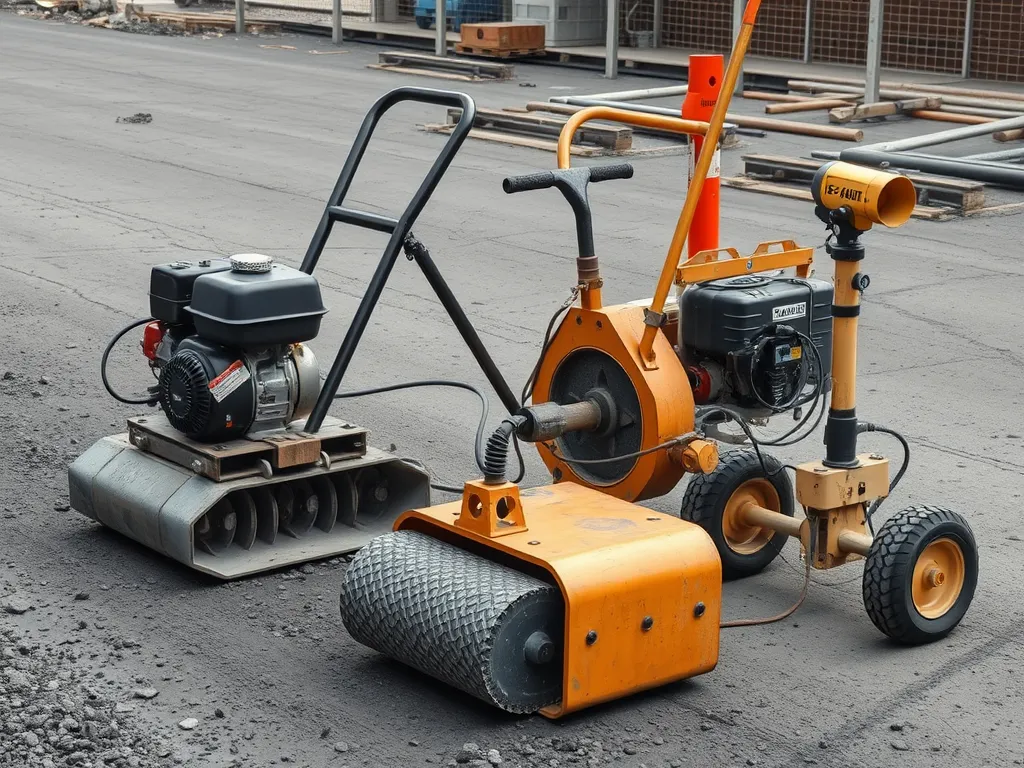
Pro tools are heavy-duty gear built for speed and scale. Think asphalt pavers ($50,000-$300,000), steel drum rollers ($15,000-$100,000), infrared heaters ($8,000-$25,000), and recyclers. These machines lay mix at 250°F+, compact to 95% density, and handle 10+ tons per hour. Contractors use them for roads, lots, or thick lifts needing 2-4 inch depths. High upfront cost, but built to last 10-15 years with routine care.
What Are DIY Asphalt Tools?
DIY kits focus on small fixes. Hand tampers ($30-$150), squeegees ($20-$80), crack fillers ($10-$40 per can), and mini infrared patches ($500-$2,000) top the list. Rentals like walk-behind rollers cost $100-$300 per day. These tools work for driveways under 500 sq ft or patches under 2 inches thick. Limited to cold mix (under 200°F) and manual compaction, they cut gear costs but demand more time.
With both tool types clear, the next step is to break down their upsides and limits.
Pros and Cons Of Professional Asphalt Tools
High-performance asphalt machinery delivers unmatched results but carries financial and operational trade-offs. Balancing upfront costs against long-term value determines whether professional tools justify the investment for your project.
Advantages Of Professional-grade Equipment
Professional tools like vibratory rollers ($15,000-$45,000) achieve 95% compaction density – critical for pavement longevity. Infrared asphalt heaters repair 500+ sq ft per hour, reducing labor time by 60% compared to manual methods. High-output asphalt pavers lay mix at 300°F, ensuring proper binding and surface smoothness. These tools typically last 10-15 years with warranties covering 3-5 years of repairs.
Contractors using professional gear complete parking lot projects 4x faster than DIY crews. Heavy-duty equipment handles 5-10 tons of asphalt daily without performance loss, making it cost-effective for roads exceeding 1,000 sq ft. Automated temperature controls and grade sensors reduce material waste by up to 18%.
Limitations Of Professional Tools
Initial costs create barriers: a basic asphalt recycler runs $28,000, while walk-behind rollers start at $6,500. Annual maintenance adds $1,200-$4,500 for fluid changes, part replacements, and EPA-compliant emissions checks. Storage demands 150-400 sq ft of covered space – impractical for homeowners.
Most professional tools require certified operators ($75-$150/hour labor costs). Underused equipment becomes a liability: a $12,000 asphalt crack sealer used twice yearly costs $500 per application before materials. For driveways under 400 sq ft, rental fees often exceed project budgets at $300-$800 daily.
While professional tools excel in large-scale applications, DIY options present unique trade-offs for smaller projects.
Also See: How Long Do Asphalt Roads Last? Lifespan Overview
Pros and Cons Of DIY Asphalt Tools
DIY asphalt tools offer unique trade-offs between upfront savings and long-term performance. Let’s break down their strengths and weaknesses for projects like driveway repairs or small patches.
Benefits Of DIY Toolkits
Entry-level tools like hand tampers ($30-$80), asphalt rakes ($25-$60), and squeegees ($15-$40) require minimal upfront investment. These kits work for small-scale jobs under 200 sq.ft., eliminating contractor markups. For example, sealing a 300 sq.ft. driveway with DIY tools costs $0.15-$0.25 per sq.ft. versus $0.50-$1.50 for professional services. Homeowners also avoid equipment rental fees ($100-$300/day) for steam rollers or infrared heaters.
Drawbacks Of DIY Approaches
Manual tools struggle with large areas or thick lifts. A hand tamper achieves 85-90% compaction density compared to 92-95% with vibratory plate compactors ($1,200-$3,500). Inconsistent compaction leads to premature cracks, increasing long-term repair costs by 40-60%. DIY hot mix asphalt applications often lack temperature control, risking thermal segregation below 275°F – a common cause of raveling and potholes. Limited warranties on DIY work further shift liability to homeowners.
While DIY asphalt tools cut initial costs, their effectiveness depends on project scope and technical precision. Next, we’ll quantify these trade-offs through direct cost comparisons between amateur and pro-grade setups.
Cost Analysis: Professional Vs DIY Asphalt Tools
Choosing between professional and DIY asphalt tools requires balancing immediate expenses against long-term value. Let’s break down the financial factors shaping this decision.
Initial Investment Vs Long-term Savings
Professional-grade tools like vibratory plate compactors ($1,800-$2,500) or infrared asphalt heaters ($3,000+) demand higher upfront costs. DIY kits—hand tampers ($50-$150), squeegees ($20-$60), and asphalt lutes ($40-$100)—cost less initially but lack durability. A pro-grade compactor lasts 10-15 years with maintenance, while hand tools often crack or warp within 2-3 projects. For contractors handling 10+ jobs annually, professional equipment pays off through reduced replacement costs and consistent performance.
Project Scale and Cost Implications
Small repairs (under 200 sq.ft.) favor DIY tools: renting a plate compactor costs $75-$125/day versus buying one for $2,000. For large projects like driveways (1,000+ sq.ft.) or parking lots, professional tools cut labor time by 40-60%. Paving a 10,000 sq.ft. lot with DIY methods risks uneven compaction, leading to $4-$8 per sq.ft. in repairs. Infrared heaters used by pros fix cracks in 30 minutes; DIY cold-patch methods take 2+ hours and fail faster.
- Driveway sealing: DIY squeegee ($25) + 8 hours labor vs pro spray system ($5,000) + 2 hours labor
- Crack filling: DIY pour pots ($15) vs pro-grade melter applicators ($1,200)
Time Efficiency Vs Labor Costs
Professional tools slash project timelines. A skid-steer asphalt roller ($25,000) lays 500 sq.ft./hour; hand tamping covers 100 sq.ft./hour. For a 1,200 sq.ft. driveway, renting a roller ($200/day) saves 10 labor hours—$500 saved at $50/hour rates. DIY methods increase physical strain, raising injury risks and worker fatigue costs. Delays from weather exposure (asphalt cools at 2°F per minute) also heighten material waste: 5% loss per hour in unskilled setups.
Up next: How surface quality and equipment lifespan shape your return on investment.
Quality and Durability Comparison
Tool quality impacts both asphalt surfacing results and long-term costs. High compaction rates, surface uniformity, and joint integrity dictate how long pavement lasts before cracks or potholes form.
Finish Quality and Longevity Of Asphalt Surfaces
Professional tools like vibratory rollers achieve 92-95% density with PG 64-22 binders, matching DOT standards. This compaction minimizes air voids, slowing oxidation and water damage. DIY hand tampers or rental compactors often hit just 85-88% density, risking premature raveling in 3-5 years. Infrared asphalt heaters used by pros also allow seamless patching, while DIY cold-pour methods create weak spots.
Tool Lifespan and Maintenance Costs
Steel-plated professional rollers last 15+ years with $200-$500 annual upkeep (fluid changes, belt replacements). DIY polypropylene screeds crack after 50-75 uses, needing $80-$120 replacements. Gas-powered pro-grade tampers require $30/month in fuel and oil but withstand 300+ projects. Budget electric models burn out motors within 30-40 hours, adding $150-$250 in tool replacement costs per driveway job.
Surface durability and tool reliability directly sway total costs over 10 years. Up next: how safety risks and sustainability factor into your asphalt tool investment.
Safety and Environmental Considerations
Choosing between professional and DIY asphalt tools involves more than upfront costs. Safety risks and ecological effects directly impact long-term value.
Safety Risks in DIY Asphalt Projects
DIY asphalt work exposes users to high-temperature burns from 300°F+ hot mix. Manual tamping tools lack pressure sensors, increasing uneven compaction risks. Cracks from poor density can cause tripping hazards within 12-18 months. OSHA reports 23% of driveway injuries involve improper tool use, including carbon monoxide exposure from rental compactors.
Professional equipment includes safety shields, automated temperature controls, and emission-reducing burners. Pavement rollers with GPS-guided leveling cut error rates by 41% compared to hand tools. These features lower liability costs—a key factor in asphalt tool cost-effectiveness.
Environmental Impact Of Tool Choices
DIY asphalt tools often waste 15-20% more material due to over-pouring or rework. Gas-powered compactors emit 4.8 lbs CO2 hourly, while pro-grade electric vibratory plates produce zero onsite emissions. Recycled asphalt pavement (RAP) reuse rates hit 94% with industrial grinders but drop to 65% in DIY setups using manual breakers.
Sealant sprayers in professional kits reduce VOC emissions by 30% versus brush-on methods. Thermal imaging cameras in pro rigs optimize heat application, cutting energy use by 22%. These efficiencies make professional asphalt equipment cost effectiveness measurable beyond dollars.
Balancing safety specs and eco-footprints reveals hidden savings. Next, we’ll tackle common questions about sealing costs and material comparisons.
Frequently Asked Questions
Is DIY or Professional Asphalt Sealing More Cost-effective?
DIY asphalt sealing can be more cost-effective for small projects due to lower upfront costs. However, for larger projects, the efficiency and effectiveness of professional services often result in better long-term value, reducing the risk of needing repairs due to improper application.
How Does Asphalt Cost-effectiveness Compare to Other Materials?
Asphalt generally offers lower initial costs and faster installation compared to alternatives like concrete. Additionally, maintenance costs for asphalt can be more manageable, but the choice ultimately depends on factors such as project size and desired longevity.
What Factors Influence the Cost Of an Asphalt Job?
Several factors influence the cost of an asphalt job, including the size of the area being paved, the thickness of the asphalt layer, the condition of the existing surface, and labor costs. Equipment choice—whether professional or DIY—can also significantly impact overall expenses.
Asphalt Vs Concrete Parking Lots: Cost Differences?
Asphalt parking lots typically have lower installation costs than concrete due to cheaper materials and faster application times. However, concrete may last longer with less maintenance in some climates, making it important to assess your specific needs and long-term costs carefully.
Closing Thoughts
Choosing between professional and DIY asphalt tools requires careful consideration. Each option offers distinct advantages and challenges. Professional tools often guarantee superior quality and efficiency but come with a higher initial investment. In contrast, DIY tools present an affordable alternative, although they may compromise on finish and durability.
Ultimately, the decision hinges on your project scope, budget, and experience level. Smaller, straightforward projects might benefit from a DIY approach, while larger jobs often justify the investment in professional equipment. Assess your specific needs to determine the most cost-effective solution.
For more resources and information on asphalt projects, be sure to check out Asphalt Calculator USA.
Additional Resources for You:
- National Asphalt Pavement Association (NAPA, Industry Reports & Best Practices)
- Cost Breakdown: DIY vs Contractor | B&E Coating Services
- Asphalt vs. Concrete Driveway: Which Should You Choose? | Angi
- Evaluating Professional vs DIY Title Reviews: A Guide | Guiding Legal Counsel
- Pros and Cons: DIY vs Professional Blacktop Driveway Sealing