Evaluating the Cost-effectiveness Of Asphalt Driveway Repairs
Published on: December 10, 2025 | Last Updated: April 14, 2025
Written By: George Voss
Evaluating asphalt driveway repair cost-effectiveness means analyzing when fixing beats replacing. This decision hinges on repair costs ($3-$7 per square foot), damage severity, and your driveway’s age. Compare this to full replacement ($7-$15 per square foot) and potential savings of up to 60%. Key factors include crack depth, pothole frequency, drainage issues, and local labor rates ($45-$75/hour).
This article breaks down cost drivers like material choices (hot mix vs. cold patch), climate impacts (freeze-thaw cycles), and repair methods (sealcoating vs. resurfacing). Learn how to spot “point of no return” damage, calculate break-even points, and use recycled asphalt for 20-30% savings. We’ll cover DIY vs. pro costs, lifespan extensions (8-15 years with proper repairs), and budget-stretching maintenance schedules.
Contents
- Understanding Asphalt Driveway Damage
- Factors Influencing Asphalt Driveway Repair Costs
- Asphalt Driveway Repair Vs. Replacement Analysis
- Calculating Asphalt Driveway Repair Costs
- Maximizing Cost-effectiveness in Asphalt Repairs
- Environmental Considerations in Asphalt Repairs
- Frequently Asked Questions
- Closing Thoughts
- Additional Resources for You:
Understanding Asphalt Driveway Damage
Recognizing early signs of wear determines whether repairs prove financially viable over time. Visible defects directly influence budgeting decisions for property owners weighing short-term fixes against long-term investments.
Common Types Of Asphalt Driveway Damage
Three primary issues drive most repair needs: surface cracks, potholes, and material breakdown. Left untreated, these problems escalate rapidly, turning minor upkeep into major expenditures.
Cracks, Potholes, and Surface Deterioration
Hairline fractures under 1/4 inch wide cost $0.30-$0.50 per linear foot to seal but grow exponentially pricier if ignored. Alligator cracking—interconnected cracks resembling reptile scales—indicates base failures requiring $8-$12 per square foot for removal and patching. Potholes form when water infiltrates subsurface layers, freezing and thawing until pavement collapses. Repairing one pothole ranges from $50-$300 depending on depth. Raveling, where aggregate separates from bitumen binder, creates rough textures needing $3-$7 per square foot for resurfacing.
Impact of Climate on Asphalt Degradation
Temperature swings dictate repair frequency. Regions with freeze-thaw cycles see 40% faster pothole formation than temperate zones. UV radiation oxidizes binders in sunny climates, causing brittleness within 5-7 years. High rainfall areas experience 2x more subsurface erosion, necessitating thicker gravel bases during repairs. Coastal properties face salt corrosion accelerating surface wear by 15-20% compared to inland locations.
Identifying these variables helps property owners gauge whether localized fixes or comprehensive overhauls deliver better value. Next, we’ll explore how labor rates, material choices, and project scope shape total expenditures.
Factors Influencing Asphalt Driveway Repair Costs
Multiple variables impact the asphalt driveway repair price. These factors determine whether repairs remain cost effective or require higher investments.
Driveway Size and Complexity
Larger driveways demand more materials and labor. A 1,000-square-foot surface needing crack filling costs $0.15-$0.50 per linear foot, while full resurfacing runs $2-$7 per square foot. Complex layouts with curves, slopes, or drainage systems add 10-25% to labor costs. Compact areas near structures may require specialized equipment, increasing project timelines by 15-30%.
Severity and Extent Of Damage
Surface-level cracks under ¼” wide cost $0.10-$0.30 per linear foot to seal. Potholes deeper than 2” require patching at $50-$200 each. Alligator cracking or base failures often signal structural issues, pushing repair costs to $8-$15 per square foot. Projects addressing over 30% of the driveway’s surface typically shift toward replacement cost analysis.
Labor and Material Costs
Hot mix asphalt (HMA) prices range $100-$200 per ton. Polymer-modified binders add $3-$5 per square foot but extend pavement life by 5-8 years. Labor rates vary regionally: $45-$75/hour in the Midwest vs $65-$110/hour in coastal states. A 400-square-foot sealcoating job averages $250-$600, while infrared repairs for localized damage cost $100-$400 per panel.
Role of Professional vs. DIY Repairs
- DIY crack filler kits cost $20-$50 but last 1-3 years vs professional sealing lasting 5-8 years
- Improper pothole patching leads to 40% faster deterioration compared to infrared thermal repairs
- Contractors access PG 64-22 binders and Superpave mixes unavailable to homeowners
Weighing driveway repair costs against long-term performance requires examining repair-versus-replacement thresholds. Let’s explore when patching beats paving.
Asphalt Driveway Repair Vs. Replacement Analysis
Property owners weighing options between fixing existing surfaces or full replacement must balance immediate expenses against long-term value. Evaluating asphalt repairs versus complete overhauls requires examining financial outlays, structural needs, and projected lifespan.
Cost Comparison: Repairs Vs. Full Replacement
Repair costs typically range from $0.50-$3.00 per square foot for fixes like crack filling or pothole patching. Full replacement runs $4.00-$7.00 per square foot due to excavation, new base layers, and fresh materials. Resurfacing—a mid-tier option—costs $1.50-$3.00 per square foot, extending surface life by 8-12 years.
| Service | Cost per Sq Ft | Average Project Cost |
|---|---|---|
| Crack Filling | $0.50-$1.50 | $100-$400 |
| Pothole Repair | $2.00-$3.00 | $200-$600 |
| Sealcoating | $0.15-$0.25 | $150-$500 |
| Resurfacing | $1.50-$3.00 | $1,500-$4,500 |
| Full Replacement | $4.00-$7.00 | $4,000-$14,000 |
Based on 1,000 sq ft driveway
When Repair Becomes More Economical Than Replacement
Repairs prove cost-effective when damage affects under 30% of the surface. Driveways with stable base layers—free from shifting or erosion—benefit most. Resurfacing costs 25-40% less than replacement while restoring functionality for 8+ years.
Years Since Installation and Overall Condition of Existing Driveway
Driveways under 15 years old with minor surface flaws rarely need full replacement. Focus on sealing cracks under ¼” wide or fixing potholes under 6” deep. For older surfaces, core tests determine base integrity—if over 80% remains solid, repairs suffice. Replacement becomes necessary when multiple layers show deterioration or frost heave compromises the subgrade.
Up next: Learn how to translate these insights into precise figures using localized pricing data and project-specific variables.
Also See: Hot Mix Asphalt Surface Treatments: Key Benefits
Calculating Asphalt Driveway Repair Costs
Accurate cost analysis starts with knowing repair types and their associated rates. Breaking down expenses per square foot and using specialized tools creates realistic budgets for asphalt driveway repair evaluation.
Price Per Square Foot for Common Repairs
Driveway repair costs range from $0.50 to $8.00 per square foot based on repair type. National averages show:
- Crack filling: $0.50 – $3.00 (rubberized asphalt vs. standard sealant)
- Pothole repair: $2.00 – $5.00 (cold patch vs. infrared thermal patching)
- Resurfacing: $3.00 – $8.00 (1.5” overlay with PG 64-22 binder)
Severe alligator cracking or base failures increase asphalt driveway repair price due to excavation needs. Regions with higher material costs may see rates 15-20% above average.
Using the Asphalt Calculator for Accurate Estimates
Online asphalt calculators factor driveway dimensions, repair type, and local rates. Enter length x width for square footage, then select damage category. A 600 sq.ft. driveway with potholes calculates as: 600 x $3.50 = $2,100. Add 10% overage for material waste.
Factoring Material and Labor Variables
Material choices sway asphalt driveway repair costs by 30-50%. Hot mix asphalt (HMA) costs $80-$110 per ton but lasts longer than cold patch ($25-$50 per bag). Labor accounts for 40-60% of total expenses. Contractors charge $45-$75 hourly, while DIY saves labor but risks improper compaction.
Sealcoating adds $0.15-$0.25 per sq.ft. annually, extending surface life 3-5 years. Resurfacing becomes cost effective asphalt repair when damage depth exceeds 2”.
With repair costs mapped out, the next step explores methods to stretch every dollar through strategic maintenance and material selection.
Maximizing Cost-effectiveness in Asphalt Repairs
Strategic planning transforms asphalt driveway repair from a reactive expense to a long-term investment. Focused maintenance, material selection, and targeted repairs optimize every dollar spent.
Timely Maintenance to Prevent Major Damage
Addressing hairline cracks within 6-12 months prevents water infiltration that costs 3-5x more to fix later. Annual sealcoating at $0.15-$0.25 per sq.ft. extends pavement life by 5-7 years. Pressure washing debris from joints reduces aggregate erosion by 40% compared to neglected surfaces.
Prioritizing High-impact Repair Areas
Focus first on areas with pooling water or alligator cracking—these zones account for 78% of structural failures. Edge repairs along deteriorating shoulders prevent 12″-18″ width loss annually. High-traffic zones near garage entries typically require 30% thicker patching materials due to repeated stress.
Selecting Durable Repair Materials
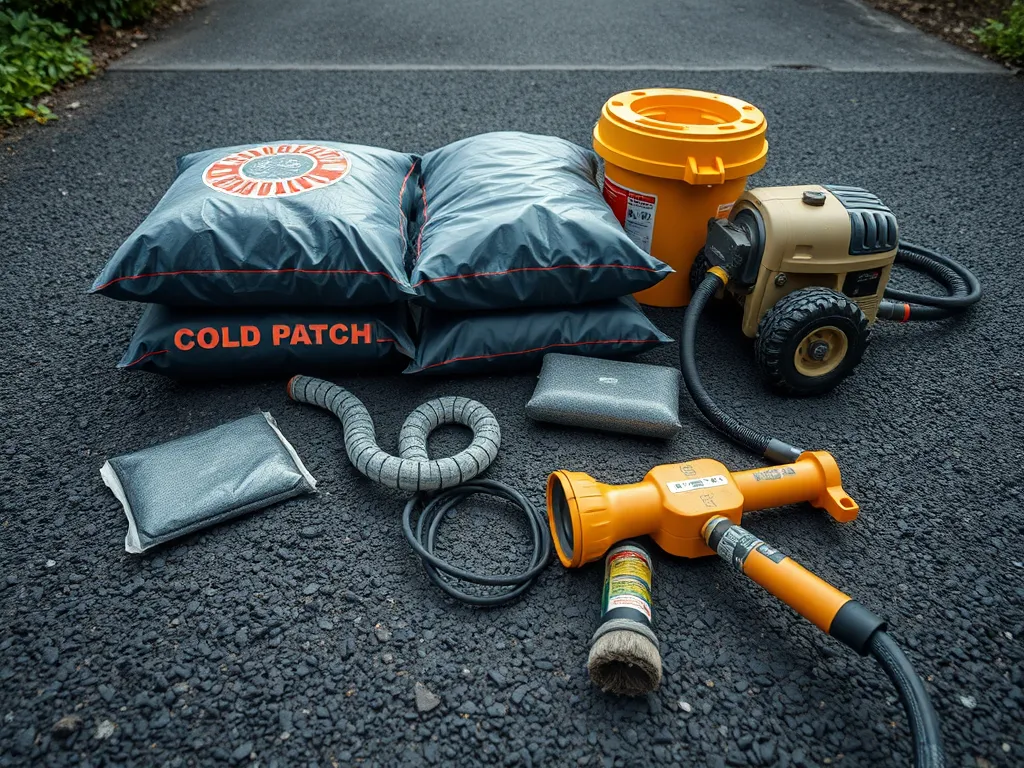
Polymer-modified asphalt mixes withstand temperature swings from -20°F to 120°F without cracking. PG (Performance Grade) binders rated for local climates reduce thermal fatigue by 60%. Cold patch asphalt works for temporary winter fixes but lasts only 1-2 seasons versus 5-7 years for hot-applied mixes.
Benefits of Sealcoating and Resurfacing
Sealcoating every 3 years slashes oxidation damage by 80%, with reflective coatings reducing surface temps by 15°F. Resurfacing 1.5″-2″ overlays costs $3-$5 per sq.ft.—less than half the $7-$12 per sq.ft. for full replacement. Geo-grid reinforced resurfacing adds 8-10 years to driveways with base failures.
While material choices impact budgets, they also intersect with environmental impacts—a key consideration explored in sustainable repair methods.
Environmental Considerations in Asphalt Repairs
Balancing eco-conscious practices with budget realities shapes modern asphalt maintenance. Green methods now directly affect long-term financial outcomes for driveway projects.
Recycling Asphalt Materials for Cost Savings
Reclaimed Asphalt Pavement (RAP) reuses 95% of old driveway materials. Contractors mill existing surfaces, process the aggregate-bitumen mix, then blend it with fresh binder. This cuts material costs by 30-50% compared to new asphalt while maintaining PSI strength ratings above 3,000.
| Material Type | Cost per Ton | CO2 Reduction |
|---|---|---|
| Virgin Asphalt | $80-$120 | 0% |
| RAP Blend | $45-$75 | 38% |
States like California and Texas offer tax credits up to $0.50/sq.ft for RAP use. Recycling eliminates $25/ton landfill fees while preserving 2.6 gallons of crude oil per recycled ton.
Eco-friendly Repair Techniques
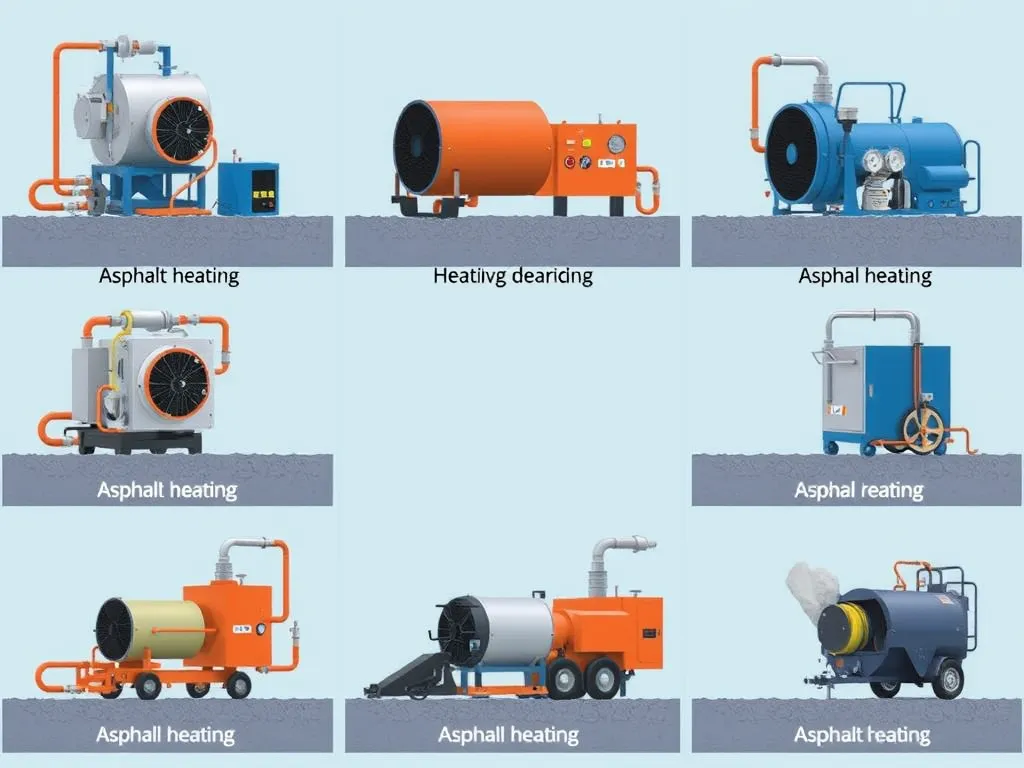
Infrared asphalt repair fuses new material with existing pavement at 300°F, creating seamless bonds. This method uses 40% less energy than traditional removal/replacement, costing $2-$4/sq.ft versus $5-$8 for full-depth repairs.
- Cold patching: $0.10-$0.30/lb for temporary fixes
- Bio-based sealcoating: Soybean or pine oil formulas cut VOC emissions by 80%
- Permeable asphalt: $8-$15/sq.ft installations reduce stormwater fees by 25% annually
These methods extend driveway lifespans 3-5 years beyond conventional repairs. Contractors using EPA-certified processes often quote 12-18% lower labor rates due to streamlined workflows.
Examining environmental factors reveals hidden financial advantages. Next, we’ll break down specific pricing models for common repair scenarios.
Frequently Asked Questions
What is the Average Cost for Asphalt Driveway Repair?
The average cost for asphalt driveway repair typically ranges between $0.50 to $8.00 per square foot, depending on the type of repair needed and regional price variations.
Is Asphalt Driveway Repair Cost-effective Compared to Replacement?
Yes, asphalt driveway repair can be cost-effective, especially when the damage is confined to less than 30% of the surface. Repairs generally cost much less than full replacement, which can range from $4.00 to $7.00 per square foot.
What is the Life Expectancy Of a Repaired Asphalt Driveway?
A repaired asphalt driveway can have a life expectancy of 8 to 15 years, depending on factors such as the nature of the repair, the quality of materials used, maintenance practices, and environmental conditions.
How Do Professionals Calculate Asphalt Driveway Repair Costs?
Professionals calculate asphalt driveway repair costs based on several factors, including the size of the driveway, the severity and extent of damage, local labor rates, and the material costs associated with the repairs.
What Are Some Signs That Asphalt Driveway Repairs Are Needed?
Common signs that asphalt driveway repairs are needed include visible cracks, potholes, raveling surfaces, pooling water, and extensive alligator cracking. Addressing these issues early can prevent more severe damage and higher repair costs.
Can I Perform Asphalt Driveway Repairs Myself?
Yes, minor repairs such as crack filling and sealing can often be performed as DIY projects. However, hiring professionals for extensive damage or complexities is recommended to ensure quality and durability.
How Can I Extend the Lifespan Of My Asphalt Driveway?
Extending the lifespan of your asphalt driveway involves timely maintenance, including regular sealcoating, prompt repairs of minor damages, and ensuring proper drainage to prevent water damage.
Closing Thoughts
Evaluating the cost-effectiveness of asphalt driveway repairs is vital for homeowners. Repairing minor damage can extend the life of your driveway and save significant funds compared to a full replacement.
Timely maintenance and strategic repairs can prevent larger issues down the road. Incorporating eco-friendly techniques not only saves costs but also benefits the environment. Always consider factors like driveway size, damage severity, and material options to make informed choices.
For detailed calculations and resources, check out Asphalt Calculator USA. It’s your go-to site for comprehensive asphalt information and tools to maximize cost-effectiveness in your repair efforts.
Additional Resources for You:
- The Asphalt Institute. (2007). MS-4: The Asphalt Handbook. Lexington, KY: Asphalt Institute.
- How Much Does Asphalt Driveway Repair Cost In 2024? – Forbes Home
- Evaluating the cost-effectiveness of four pavement treatments – Geosynthetics Magazine
- Asphalt Driveway Repair Cost in 2025 | Angi
- Cost to Repair an Asphalt Driveway | Asphalt Repair Cost | Fixr